
Top 10 Powerful Construction Trends Transforming Modern Australian Homes
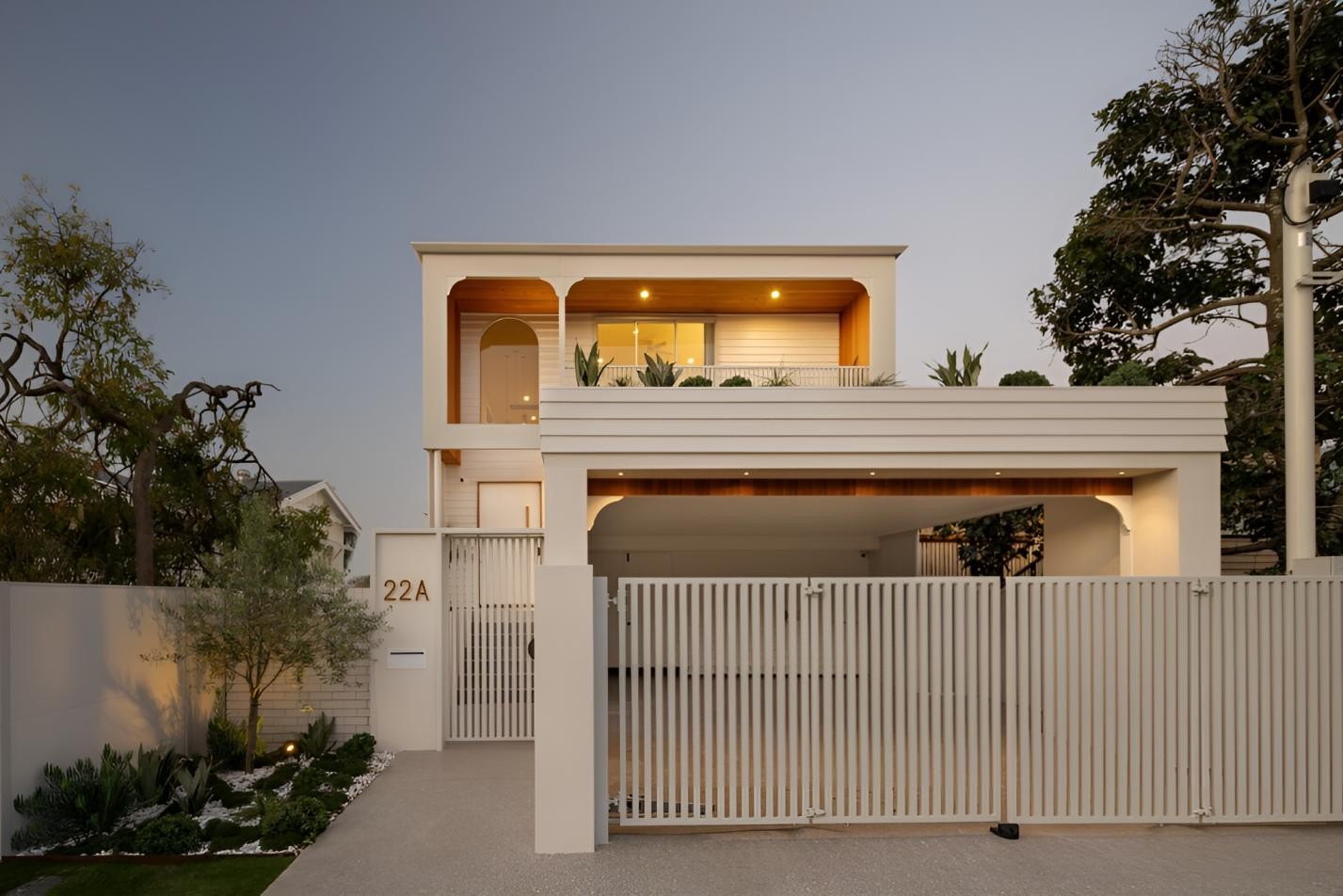
Australian residential construction is evolving fast. The homes being built today look, perform, and function very differently from those built even five years ago. Energy efficiency, indoor-outdoor integration, smart technology, and architectural individuality are all shifting from aspirational extras to expected standards. At Tide Constructions, we design and build around these trends every day.
Key Takeaways
- The 7-Star NatHERS energy rating is now mandatory for new Queensland homes: From May 2024, all new residential builds in Queensland must achieve a minimum 7-star thermal performance rating, a significant uplift from the previous 6-star standard.
- Biophilic design is driving real value: Homes with strong connection to natural light, greenery, and outdoor living typically sell for 5 to 12 per cent more than comparable properties.
- Smart home technology is now a mainstream expectation: Buyers in 2026 are actively seeking integrated home automation as a standard feature rather than a premium upgrade.
- Architectural individuality is defining the market: Custom-designed homes that reflect the owner’s lifestyle and their block’s unique character are outperforming project homes in both liveability and resale value.
- Brisbane’s climate rewards passive design: Orientation, cross ventilation, shading, and thermal mass are the most cost-effective ways to achieve high energy ratings and genuine year-round comfort in Queensland.
Trend 1: Mandatory 7-Star Energy Efficiency
This is not a trend that is coming. It is already here. From 1 May 2024, all new residential homes in Queensland must meet a minimum 7-star NatHERS thermal performance rating under the National Construction Code 2022. This standard applies to the building shell: walls, roof, windows, and floors, and is designed to reduce the energy required for heating and cooling.
A 7-star rated home uses significantly less energy to maintain comfortable indoor temperatures. Compared to the previous 6-star standard, the improvement typically translates to 20 to 25 per cent less energy for heating and cooling, with meaningful reductions in household running costs year on year.
Practically, achieving a 7-star rating in Brisbane involves early-stage design decisions around orientation, insulation levels, glazing specifications, and cross ventilation. These are not expensive retrofits. They are decisions that cost nothing extra when they are made at the concept stage and embedded into the design from the beginning.
Trend 2: Indoor-Outdoor Living as Architecture
Australians have always prized the connection between indoor and outdoor space. In 2026, that connection has become a central organising principle of residential architecture rather than a feature added at the end. The most desirable homes in Brisbane’s inner suburbs are designed around the flow between interior spaces and covered outdoor areas, creating a genuine extension of the living environment.
Homes with strong indoor-outdoor connection and natural light typically sell for 5 to 12 per cent more than comparable properties. For Brisbane’s subtropical climate, this approach also delivers genuine energy benefits through natural cross ventilation and shading that reduces reliance on mechanical cooling.
Key design elements that deliver this connection include:
- Large operable sliding or stacking doors that dissolve the boundary between interior and exterior
- Covered alfresco areas with ceiling fans and outdoor kitchens designed for year-round use
- Pool and garden integration that creates a resort-like experience in an everyday setting
- Consistent material palettes that carry interior finishes into the outdoor spaces, creating visual continuity
Trend 3: Biophilic Design and Natural Materials
Biophilic design brings the natural world into the built environment. It encompasses natural light, living greenery, natural materials, views to the outside, and spatial arrangements that respond to how people actually feel most comfortable. The evidence supporting its impact on wellbeing is substantial, and it is increasingly informing how Australian architects approach residential projects.
Research published through The Conversation on the evidence for biophilic design principles in Australian homes, confirms that access to natural light, views of green spaces, and the use of natural materials are consistently associated with improved occupant wellbeing, reduced stress, and stronger satisfaction with the built environment. For homeowners building or renovating in Brisbane, this translates into design decisions around window placement, material selection, and the integration of landscaping into the overall design intent.
Trend 4: Smart Home Technology
The smart home has moved well beyond the novelty stage. In 2026, integrated home automation is a mainstream expectation in the custom home market. Buyers are seeking systems that manage lighting, climate control, security, entertainment, and energy monitoring through a single, intuitive platform, and builders who cannot accommodate that expectation are increasingly losing relevance in the premium market.
A 2025 Houzz Australia Renovation and Design Trends Report found that 71 per cent of new home buyers ranked personal style and alignment with their lifestyle as their primary consideration in selecting a builder. Smart home integration is central to that lifestyle alignment for a growing proportion of buyers. The most effective implementations are those where automation is designed into the build from the beginning, with conduit runs, panel space, and network infrastructure built in during construction rather than retrofitted afterwards.
Custom home building process at Tide Constructions includes a dedicated selections phase where technology and automation preferences are captured and designed into the build specification before contracts are finalised, ensuring smart home features are seamlessly integrated rather than awkwardly added.
Trend 5: Architectural Individuality and Bespoke Design
The era of the generic project home is not ending, but its relevance in the premium Brisbane market is diminishing. Homeowners who have the option of a fully custom design are choosing it, and the results are showing in both liveability and resale value. A home designed specifically for its occupants, its block’s orientation and dimensions, and its surrounding built environment simply performs better as a place to live.
The Green Building Council of Australia’s research on the market value of quality residential design, consistently demonstrates that buildings rated for quality, sustainability, and design performance achieve stronger financial outcomes than those built to minimum standards. In the residential market, the parallel holds. A bespoke custom home, designed with genuine architectural intent, commands a meaningfully different premium than a volume builder product.
Trend 6: Sustainable Materials and Circular Design
The construction industry accounts for a significant share of Australia’s material consumption and waste generation. The most progressive builders and developers are addressing this through the selection of sustainable materials: recycled content, reclaimed timber, lower-carbon alternatives to conventional concrete, and finishes with reduced embodied energy.
This trend is reinforced by buyer demand. Research cited by the CSIRO’s Australian Housing Data platform on energy and performance standards for residential buildings, confirms that buyers are increasingly informed about the environmental performance of their homes and seeking evidence of considered material and design decisions. For builders, this creates both an obligation and a genuine point of differentiation.
Trend 7: Knockdown-Rebuild for Premium Inner-City Locations
Land in Brisbane’s inner suburbs is scarce and expensive. For homeowners who love their location but find their existing home no longer suits their life, a knockdown-rebuild delivers the most complete outcome: a new custom home on an established site, with mature streetscapes, proximity to infrastructure, and existing community connections.
This approach has grown significantly in popularity across Brisbane’s inner east and bayside suburbs. The key to a successful knockdown-rebuild is early engagement with your builder and a clear understanding of council requirements, demolition costs, and the design opportunities that a cleared site presents.
Trend 8: Passive Solar Design for Brisbane’s Climate
Passive solar design aligns a home’s layout, orientation, glazing, and shading with the sun’s movement to naturally heat and cool the interior. In Brisbane, where the subtropical climate combines high solar radiation with distinct seasonal variation, passive solar principles deliver some of their most dramatic benefits.
A well-oriented Brisbane home, designed with appropriate eave depths, strategic glazing, and cross ventilation paths, can reduce cooling loads by 20 to 40 per cent compared to a poorly oriented equivalent. This is the most cost-effective energy investment available, because it costs nothing extra when it is built into the design from the beginning.
Conclusion
The best custom homes in Brisbane are not just beautiful. They are designed around how people live, built to last, and attuned to where residential construction is genuinely heading. If you are planning a new custom home or architectural renovation, contact us for a free consultation. We build across Brisbane and the Gold Coast with precision, transparency and genuine craftsmanship.
FAQs:
What are the biggest construction trends in Australian homes in 2026?
The leading trends are 7-star energy efficiency, smart home integration, indoor-outdoor living, biophilic design, and bespoke architectural individuality.
Is the 7-star energy rating mandatory for new homes in Queensland?
Yes. From 1 May 2024, all new residential builds in Queensland must achieve a minimum 7-star NatHERS thermal performance rating.
What is biophilic design in home construction?
Biophilic design integrates natural light, greenery, natural materials, and views to the outdoors to improve occupant wellbeing and home value.
Does a knockdown-rebuild qualify for the Queensland First Home Owner Grant?
Yes. A knockdown-rebuild can qualify for the FHOG in Queensland if the home is newly built and meets other eligibility requirements.
How does passive solar design work in Brisbane?
Passive solar design uses orientation, glazing, eaves, and ventilation to naturally heat and cool the home, reducing energy use by up to 40 per cent.
Are smart home features worth including in a custom build?
Yes. Smart home technology integrated during construction is far more cost-effective and effective than retrofitting after handover.